Garage Doors in Toronto, OntarioRepair or replace? An honest answer.
Sometimes a new spring and rollers give a door another decade. Sometimes the panels are rusted through and a new door is the better use of the money. We look at everything and tell you which side of that line yours is on.
On new builds we coordinate with the framer and the electrician so the opening, headroom, side room and opener outlet are right before the door arrives. We install the door, tracks and opener, set everything up for the finished floor height, and leave the homeowner with a door that is ready the day they move in.
Nothing hidden. Every part we replace, you can see. Every adjustment, we explain. If we find something unexpected, we stop and tell you before continuing.
Care with heavy parts. Springs and cables are handled with the right tools and a steady method, and the door is secured before any tension is released.
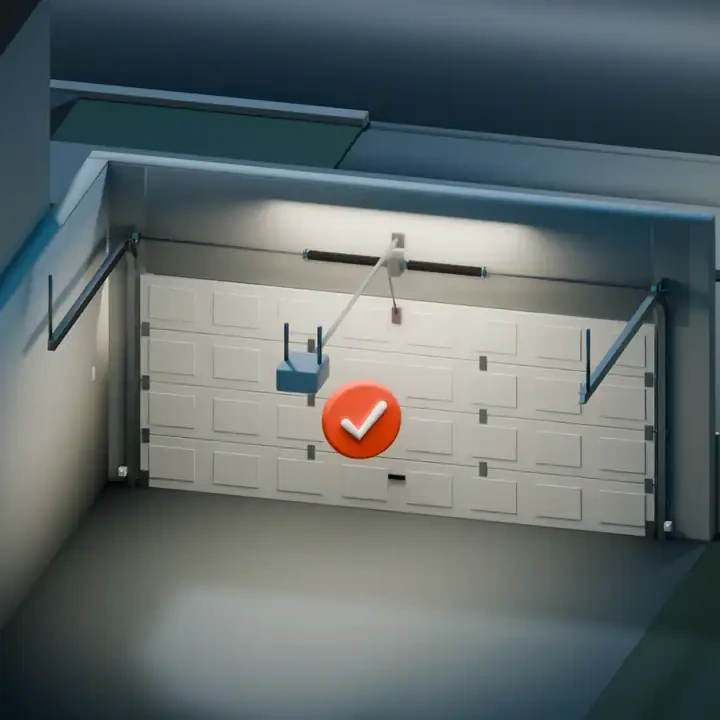
Clear about what comes next. Before we leave, you know what was done, what to watch for, and when the door might want attention again.
Open 24/7, same fees any hour. Send us a message
11 years in business · Get a quote on a new door: (289) 806-2118
Garage door spring replacement
Choose the service you need
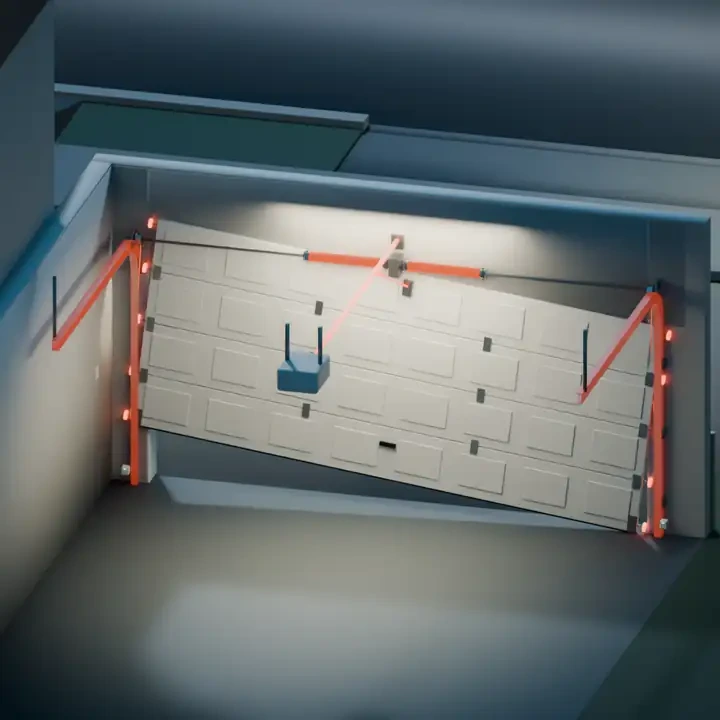
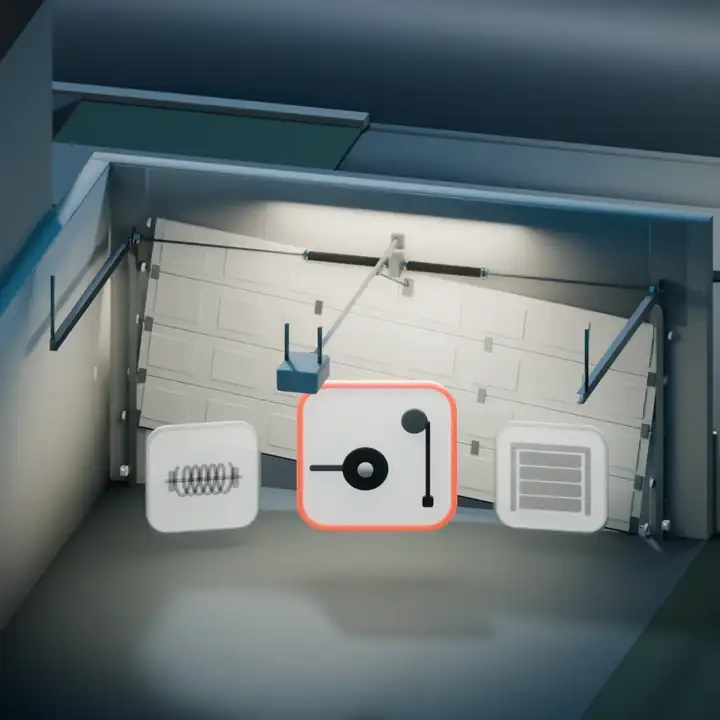
Springs and cables carry the weight, tracks and rollers guide it, the opener supplies the push, and the seals keep the weather out. When any of these falls behind, there is a service below for it.
Springs & HardwareWhen the door dropped unexpectedly, do not try to raise it.
Springs & Hardware
When the door dropped unexpectedly, do not try to raise it.
The largest moving part of your home. Worth a closer look.
A garage door belongs to the architecture. Its movement belongs to your everyday life. We bring both into the conversation.
Job sheet1 of 3
Garage Door Roller Replacement
The call
New springs went in last year and the door balances well, yet it still clicks along the ceiling track like a train over rail joints. The wheels are the originals, worn to an oval, and the noise follows them from one end of the travel to…
The morning after a thaw the opener groaned, the door stayed stuck to the icy floor for a second, then lurched up crooked. It stopped halfway with a grinding scrape and has not moved since.
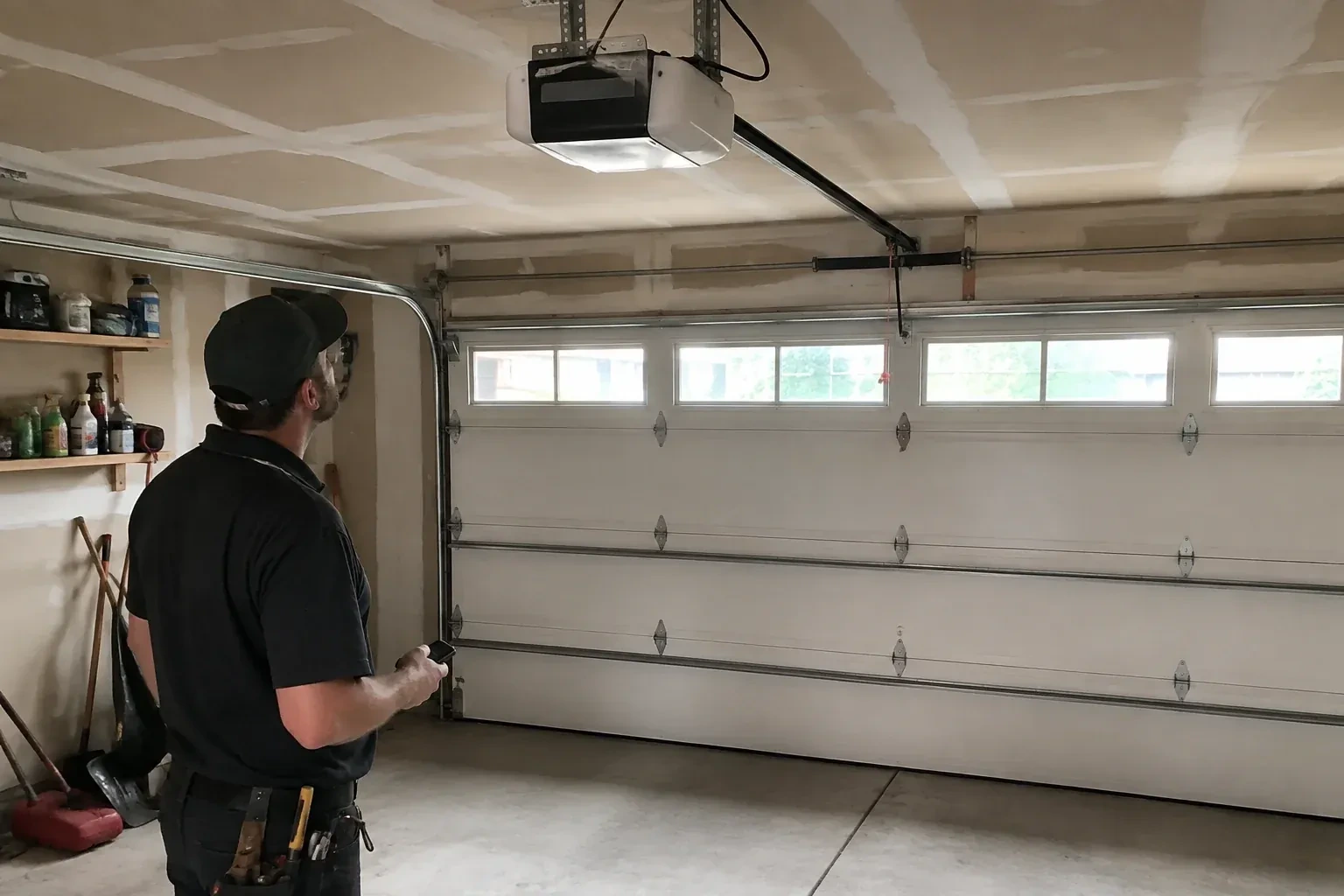
You swapped the old wooden door for a heavier insulated steel one, and the twenty-year-old opener that was kept has never settled. It strains on the way up, stops partway on cold mornings, and the rail shudders with every cycle.
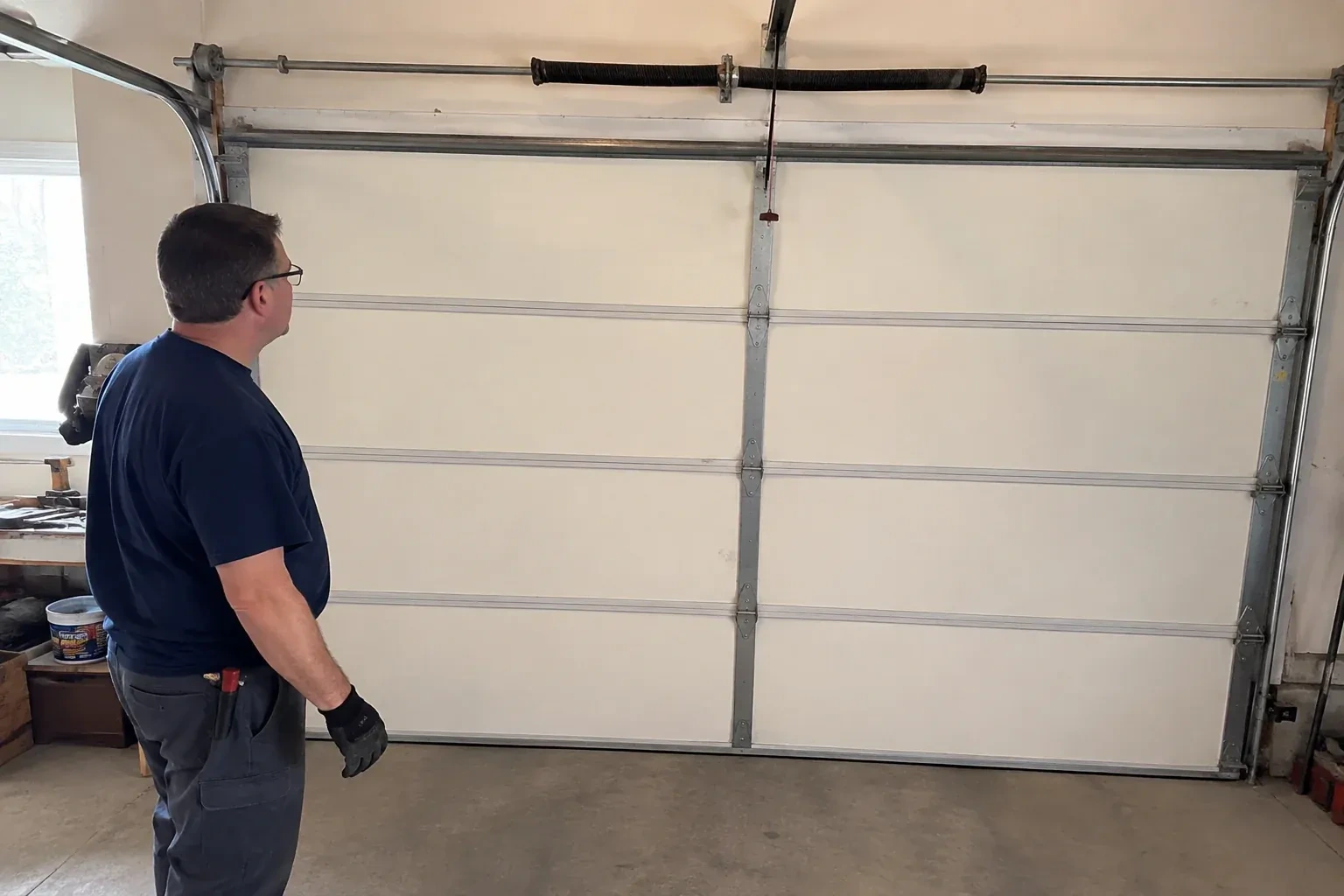
When the door dropped unexpectedly, do not try to raise it. A spring or cable has given way, and the door's weight is no longer supported. Call, keep clear of it, and let the hardware services in this group take over.
The door drops the last stretch to the floor rather than settling, and when you stop it halfway by hand it slides down instead of staying put. Balance has drifted, and the spring is no longer holding its share of the weight.
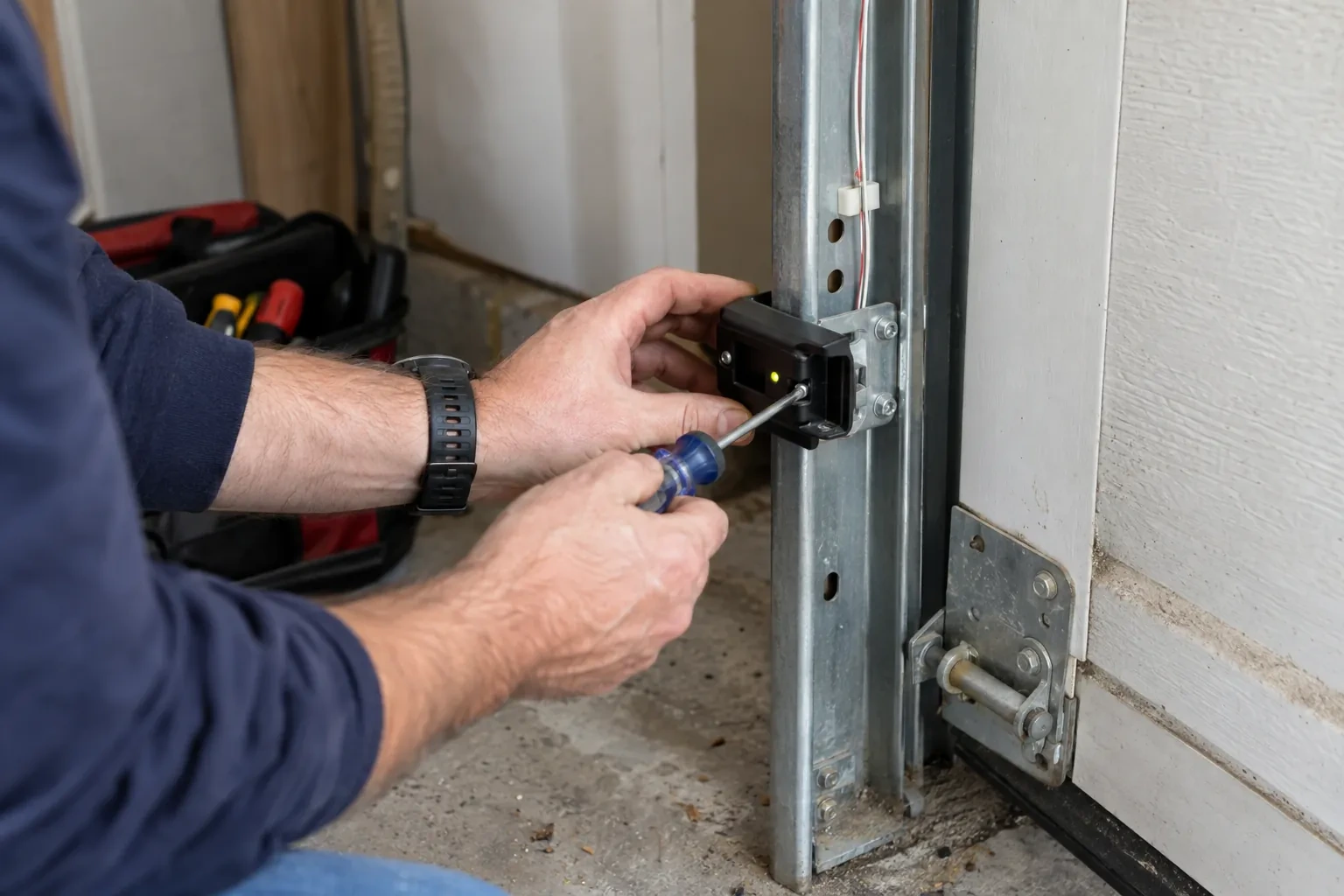
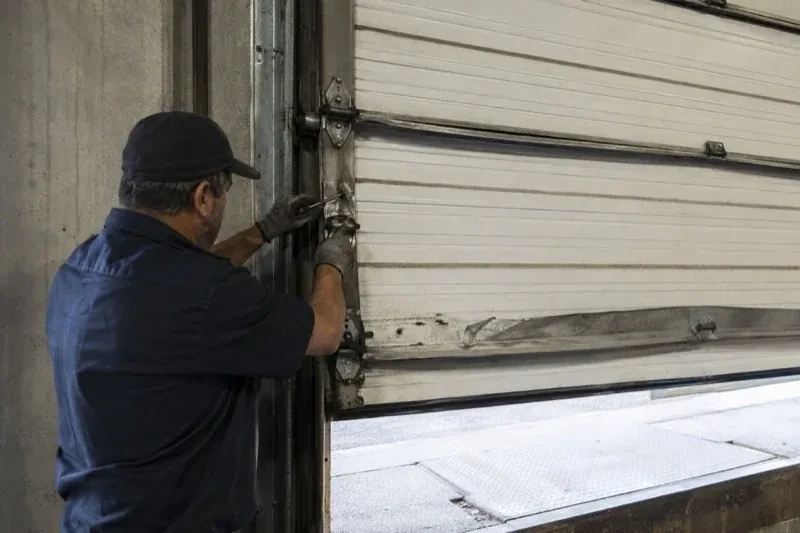
The car bumper kissed the door on the way in. The bottom panel has a dent, the bracket in that corner sits crooked, and the cable on that side has jumped and gone slack, so the door reverses every time it tries to close.
New springs went in last year and the door balances well, yet it still clicks along the ceiling track like a train over rail joints. The wheels are the originals, worn to an oval, and the noise follows them from one end of the travel to the other.
From programming a new remote to installing a smart controller you can check from your phone, this group is about how you get in and out of the garage day to day.
New doors arrive with new hardware, and the installation sets it all up from scratch: tracks aligned, springs matched, rollers seated, seals fitted and the opener paired. When we leave, the door runs as its maker intended.
On new builds we coordinate with the framer and the electrician so the opening, headroom, side room and opener outlet are right before the door arrives. We install the door, tracks and opener, set everything up for the finished floor height, and leave the…
Scene 1 of 5
Call and describe the door
On our way
Nothing hidden
Care with heavy parts
Clear about what comes next
Step 1 of 5
Call and describe the door
Describe the property, the hardware and what has changed, and the visit starts from what you have seen.
Step 2 of 5
On our way
Phone or form, whichever suits. Mention any unusual sounds, how long the trouble has gone on and whether the door still moves.
Step 3 of 5
Nothing hidden
Every part we replace, you can see. Every adjustment, we explain. If we find something unexpected, we stop and tell you before continuing.
Step 4 of 5
Care with heavy parts
Springs and cables are handled with the right tools and a steady method, and the door is secured before any tension is released.
Step 5 of 5
Clear about what comes next
Before we leave, you know what was done, what to watch for, and when the door might want attention again.
About 58% of homes in Toronto were built in 1980 or earlier, according to the 2021 Census.Where houses are older, the garage often sits beside the house rather than beneath a bedroom, so noise is a smaller concern and durability a larger one. Heavy-duty rollers, a properly sized torsion spring and cold-rated lubricant make an old door dependable for years.
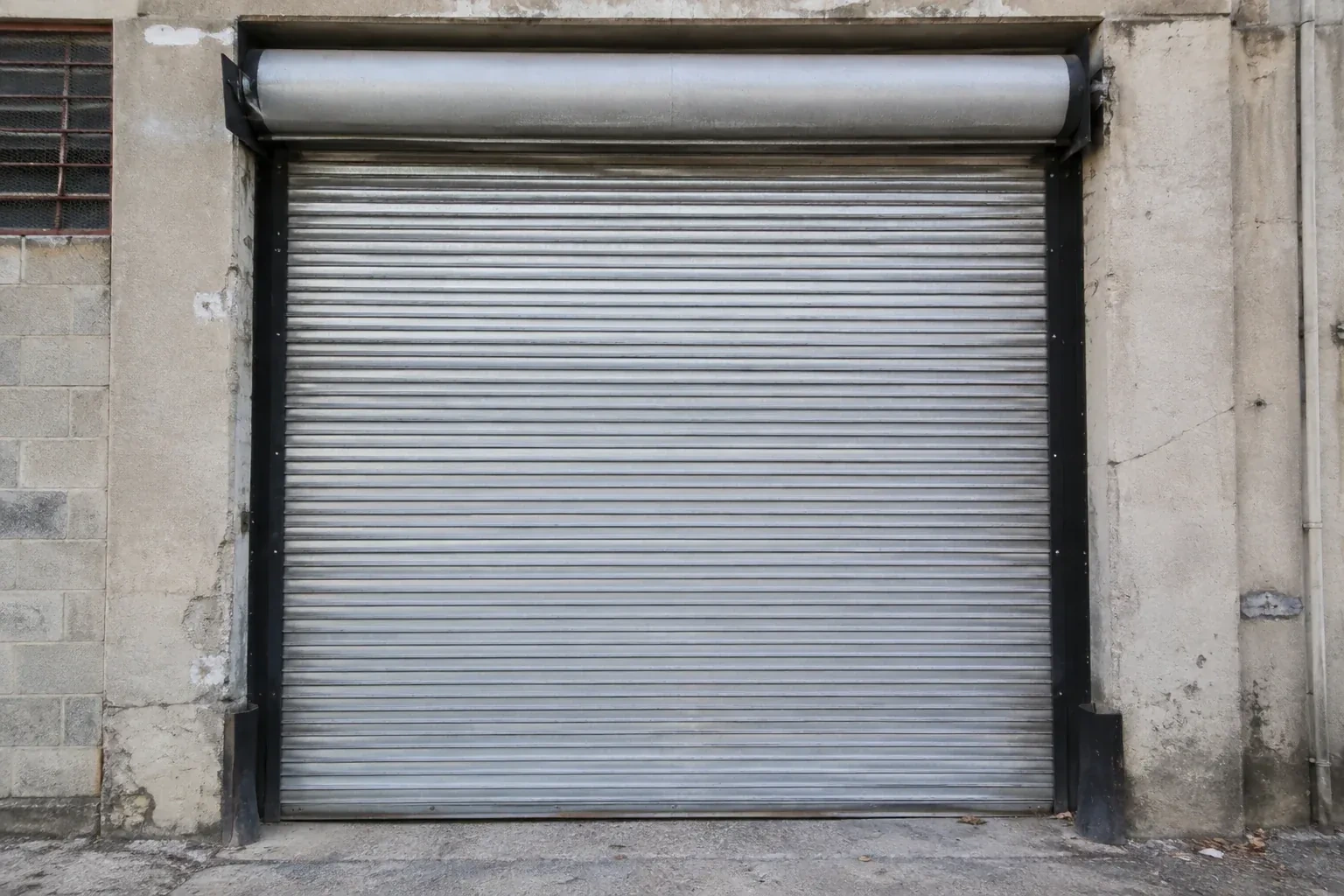
Single-detached houses make up about 23% of homes in Toronto (2021 Census).Apartment and condo buildings often have a single heavy door protecting the whole parking level, and when it stops, everyone is affected. We prioritise these calls, carry commercial operator parts, and set up a maintenance interval matched to the number of cycles the door sees each day.
Flemingdon Park Garage Door Repair Co.(289) 806-2118 · open 24/7
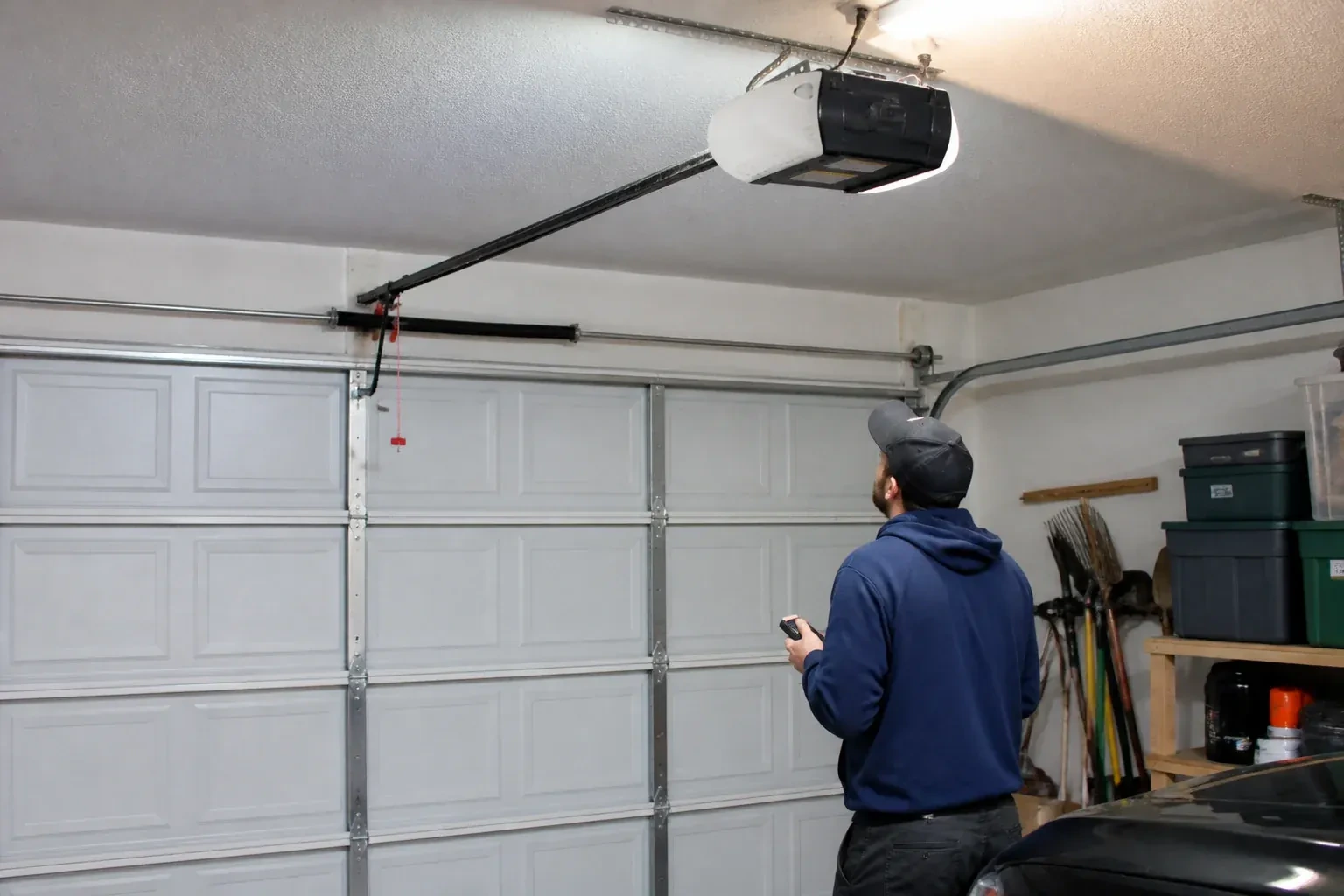
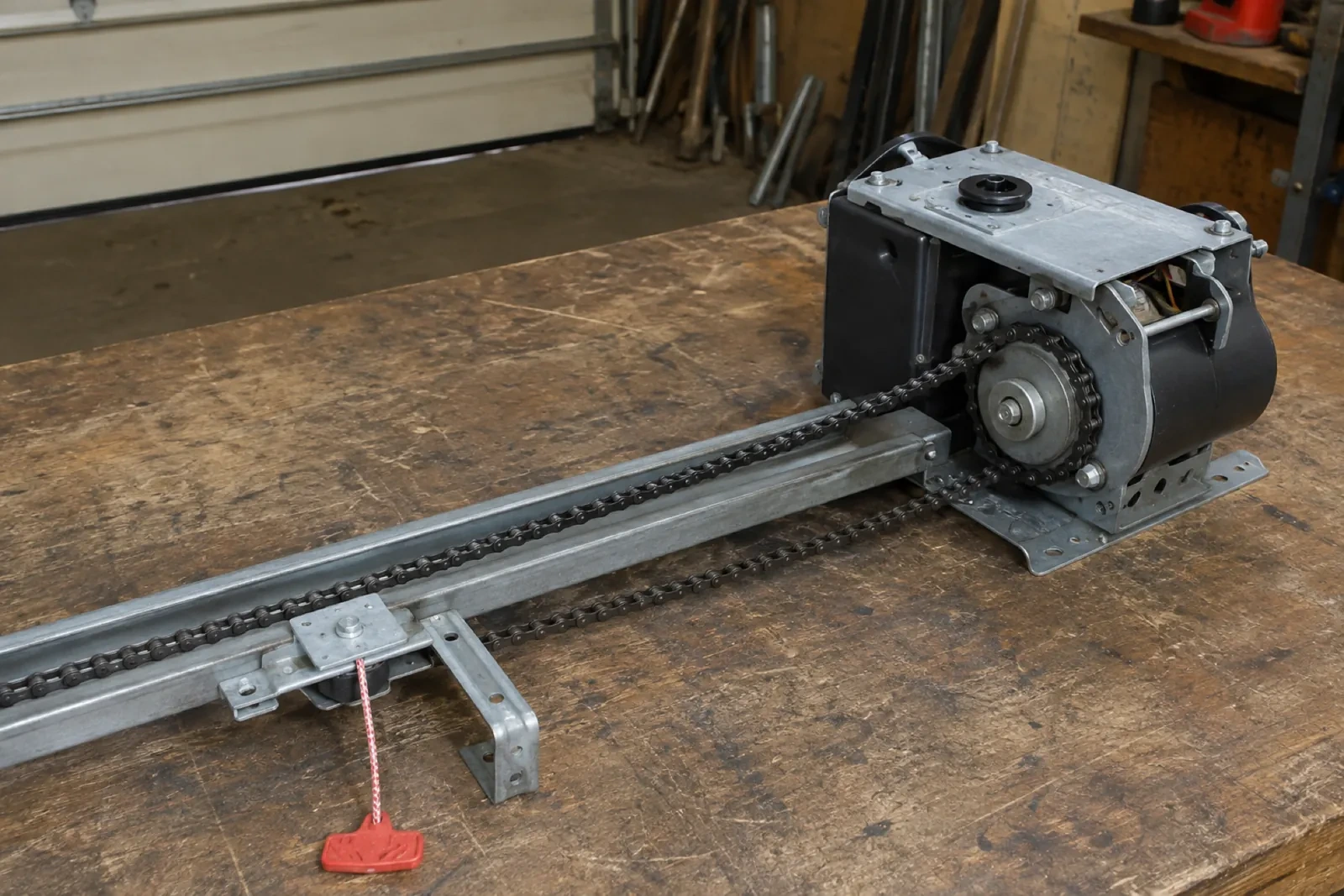
What is the red cord for?
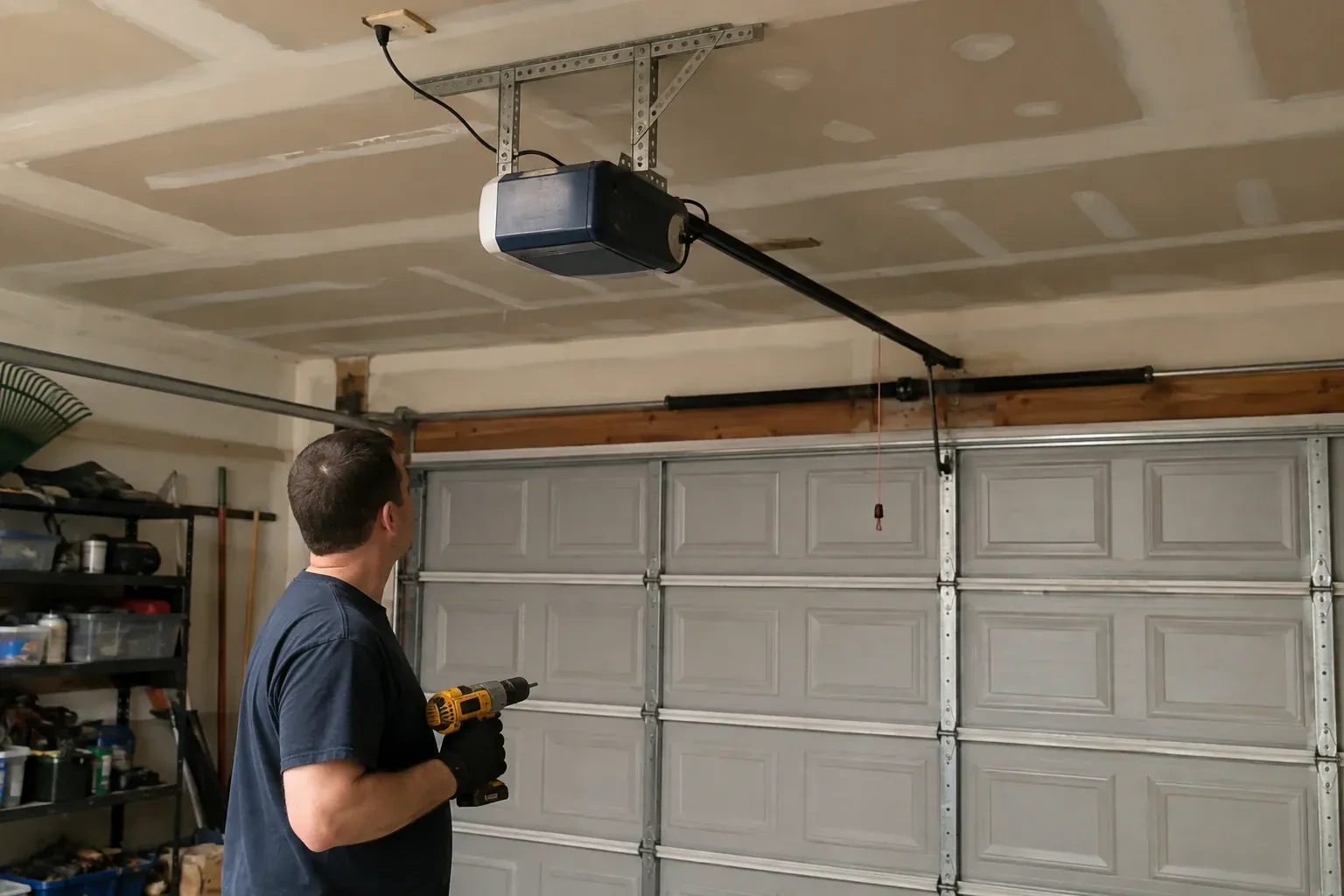
It is the manual release. A tug on the red handle unhooks the trolley from the door arm so the door can be raised and lowered by hand while the power is off or the operator is being serviced. It hangs high enough to clear a vehicle roof but low enough to reach without a ladder. To reconnect, most units need only be run once and the trolley picks the arm back up; a few take a second tug.
Chain or belt: which should I choose?
Both move the same doors, so the choice is about sound and setting. Chain is the sturdy, simple workhorse and a fine fit for a detached garage or a workshop where a little noise is nobody's concern. Belt is the pick when a bedroom, nursery or office shares a wall or floor with the garage, because it starts and stops softly and hums rather than rattles. If the ceiling is crowded, a wall-mounted unit beside the spring shaft removes the rail altogether.
How many remotes and keypads can be added?
Capacity depends on the model: current operators hold anywhere from about eight to forty remote codes, so most households can pair every driver, a keypad, in-car buttons and a phone with room to spare. Remotes are added by holding the learn button on the head unit and pressing the remote; the console guide shows the steps and the technician leaves them written down. If a remote is lost later, clearing the memory and re-teaching the others takes only a few minutes.
Will the new spring look the same as the old one?
Not necessarily, and that is fine. The paint colour on the winding cone or coil is a code that identifies wire size and wind direction, and different suppliers use their own schemes, so a matched replacement can carry a different colour than the spring it replaces. What matters is that the wire size, diameter, length and wind direction suit the door's weight and height, which is confirmed by the balance test.